Showing posts with label Youth Culture. Show all posts

Sunday, 2 October 2022

Youth Cultures and Potent Signifiers: Some Thoughts on 'Stranger Things'


I have heard a number of younger colleagues in my workplace extolling the wonders of the TV show Stranger Things. My interest piqued, I watched seasons 3 and 4 and found their earnest attachment to the show slightly enigmatic: why was a televisual homage to the 1980s (and set in the 1980s) so popular among Millennials and Zoomers? I will here offer a few explanations for their enthusiasm, which might help illuminate the current (terrible) state of Anglo-American gender relations. 

On the face of it, there is nothing especially interesting about Stranger Things. It seems to be a tidy blend of John Hughes movies like The Breakfast Club and Some Kind of Wonderful, teen adventure films like The Goonies and Stand by Me, TV shows like Saved by the Bell and Beverly Hills 92510, with various supernatural/conspiracy ideas culled from the novels of Stephen King (Carrie, It, The Stand) and Dean Koontz (Sole Survivor, Twilight Eyes) adding weight to the mix. 

Why do Zoomers and younger Millennials find all this Gen-X retro-schlock so engaging in the twenty-first century?
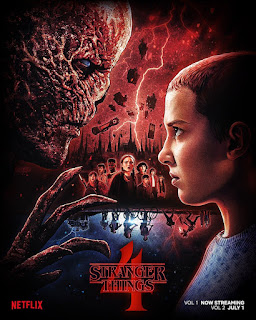


While it is not an easy question to answer in simple terms, there is a strong sociological component to Stranger Things; and this component not only explains the show's popularity, its also offer insights into the mass inceldom and gender conflicts of the present age. Let us begin: 
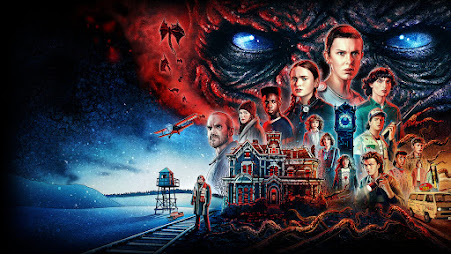
  • The show is set in the early 1980s, when a strong and well-defined youth culture prevailed. The 80s had immensely powerful and lucrative youth cultures with magazines and music aimed exclusively at the young. This culture continued into the 90s but was effectively dead by the end of that decade. Obviously, the decultured and drifting modern Zoomer is going to find this vibrant youth culture incredibly novel and  inspiring in relation to his own isolated, vacuous life. 
  • The 80s was the last decade with powerful symbolic signifiers, especially those associated with youth culture. The pan-Anglosphere youth culture of that decade transcended genders, sexualities or socio-economic classes: everyone knew the same stars and underwent the same rituals (prom nights, concerts, movies, TV and radio shows). These shared, global signifiers made it relatively easier for members of Generation X to relate to each other across barriers of class and (especially) gender. My suspicion is that this facilitated broader friendship groups and in turn, more opportunities for relationship formation. Gender relations are quite different today, where most girls are TikTok mini-celebrities while most males are sexually marginalised pariahs
  • The absence of modern social media plus the media monoculture of that time made the 80s the last decade with instantly recognisable global superstars. Music generated by organic, coherent youth cultures makes a powerful and vivid soundtrack for Stranger Things.
  • The 1980s was the last Cold War decade, which empowered rebellious youth cultures by default. The threat of nuclear annihilation inevitably does great things for youthful rebellion; by contrast, branded consumerism and social media promote youthful conformity
  • The absence of social media or mobile devices permits normal interactions between the characters in Stranger Things. Again, such real interactions appeal strongly to 'tech-alienated' Millennials and Zoomers.
  • Stranger Things cleverly hides 80s problems like endemic racism, presenting a sanitised and appealing view of the decade. The 80s were not flawless, by any means; but Millennials and Zoomers do not need to know that to appreciate the show.
  • Chronological proximity: in simple terms, the 80s are close enough to the present for modern youth to appreciate them. The 80s had video games (albeit in arcades), an emergent black middle class and a vocal LBTG movement. The overtly sexist and racist Boomer culture of the 50s, 60s and 70s is now too culturally remote (and offensive) for modern audiences. The 80s hits the 'sweet spot' in terms of cultural proximity as no other decade can.


So there were have it: the appeal of Stranger Things to people who were not even born when most of its cultural icons were stalking the lands. Unfortunately, cultural time only moves one way; so the dynamic youth culture that defined the 80s is gone forever, never to return. Its memes will persist as nostalgia only, while the Anglosphere hobbles onward into mass inceldom and overt gender-conflict.


Friday, 20 December 2019

The Decline of Youth Culture and the Rise of Inceldom


Although a lot of recent evidence suggests that the last decade - 2009-2019 - saw a massive increase in the number of male incels, I have long wondered if this is an entirely new development. There are two possible perspectives on this vexed question:

1. The decline of mainstream mass youth culture has facilitated the incel explosion; the Internet has replaced it with a Tinder culture which promotes inceldom among sub-8 men.
2. The mainstream mass youth culture originating in the mid-twentieth century served to mask inceldom under a veil of Sexual False Consciousness; the Internet has merely exposed something which has existed for many decades.

I do not pretend to offer any definitive answers to this question, just throw a few factors into the debate which most observers have overlooked. The first of these is the decline of post-war 'tribal' youth culture in the Anglosphere West, which ceased to exist in about 2008 due to the emergence of new social media technologies.

Back in the 70s, 80s and 90s there was a common western youth culture than transcended gender differences. This culture was incredibly powerful and pervaded society to an extent that modern Millennials or Zoomers can barely appreciate. Watching the movie Bohemian Rhapsody with its vast, adoring Live Aid crowds lays this out plainly. Maybe the existence of a cross-gender tribal youth culture simply did make people more liberated in those days. It surely eased the pressure of Anglo-American homosociality (puritanical gender segregation) somewhat. It also provided cross-gender social networks, venues and events (dances, concerts, hangouts) which were subsequently dynamited by Tinder and other social media based solely on appearance (which have systematically reduced low value males to sexless shadows).

Post-War youth culture produced a range of  ready-made 'tribes' which anyone could enter for the price of a few records and a haircut. In short, post-war youth culture and the various tribes within it sidestepped issues like looks, height and even ethnicity which so hamper modern youngcels. Youth subcultures cut across the 'grain' of these innate, VantaBlack Pill factors, diminishing their impact; while in our present Tinder Age, factors like looks and height have become absolutely pivotal to male mating success. It also explains why males are bearing the brunt of modern inceldom; they are now being judged solely on looks despite having innately lower sexual market value than equivalent females. The decline of white culture as the media's default setting probably played a part in this. Ethnic youth culture is simple hedonism which favours physical factors above all others; the arty white intellectualism of 80s New Wave or 60s psychedelia was far more complex and textured, permitting abstract factors like intelligence to play some role in sexual attraction.


Of course, the alternative view is that there never was a Golden Age of sexual freedom in the Anglosphere West. Even at the time, Michael Medved's Hollywood Versus America (1993) or Tony Tyler's I hate Rock and Roll (1984) suggested that young people were not having copious quantities of sex (although their assumption that this was a 'conservative' matter of choice would not impress many modern observers). In this view, the decline of Western youth culture weakened Sexual False Consciousness to reveal the mass inceldom that was always there. In other words, young men are now simply free to ADMIT to being sexually disenfranchised in a way they never were before.

So did this elaborate post-War youth culture merely mask widespread sexual disenfranchisement under a wave of Sexual False Consciousness? After all, the idea that 'everyone' under 30 was banging models every night went completely unchallenged from the early 1960s to the late 1990s: it was taken as 'given' that all males were enjoying copious quantities of free sex with nymphomaniac females. Absolutely no questioning of this assumed fact was permitted in the mainstream media of the day (not that it is now, of course), especially the media dedicated to youth culture. Because of this, researchers in those days were not really looking for evidence of widespread sexual disenfranchisement; academics bought into the omnipotent  'Sex for All' narrative just as readily as the mainstream population.

The truth probably lies somewhere between the two perspectives.  Most research suggests that Boomers and Gen X were indeed marginally more liberated than younger Millennials or Zoomers, and it is fairly obvious that the tribal youth cultures of those times played a role in this. At the same time, sexual disenfranchisement was both reduced and suppressed by this omnipotent post-war youth culture. Since I am writing for ethnic youngcels trapped in the Anglosphere as much as white oldcels and dissidents who plan to leave it, providing some illumination on the broader context of pan-Anglosphere inceldom will be useful for anyone trying to frame their situation in a broader cultural context.

I have come to believe that 2008 was a kind of cultural watershed, the last year of the Western post-War media monoculture. That year was defined by global movie blockbusters such as the Dark Knight Returns and still bore the stamp of the twentieth century, in every sense. Politics in the Anglosphere was still relatively stable and sub-8 men under 30 could still expect a heterosexual relationship. The rise of social media both terminated  this cultural phase while permitting sexually disenfranchised males to express their discontent through various online channels, free of the old monoculture's Sexual False Consciousness.

What else do you want to know?