Showing posts with label Homosociality. Show all posts

Friday, 11 February 2022

Old Maps and New Territories: Why is the Anglosphere stuck in 1958 on the Verge of 2022?

The 1950s ideal looks good; but don't rely on it

On the eve of 2022, it moves us to ask this urgent question: why are so many men still using outmoded information to navigate gender relations? Although most Anglocunts are either chasing tattooed thugs or angling for some Blue-Pilled beta to marry before running into the Wall, most Anglo-American males still worship them as secular deities

Why?


The hideous reality of the 21 century Anglobitch 

Answering this question necessarily involves addressing the whole of Anglo-American culture, of which gender-relations form but a small part. Such a timely appraisal will reveal that the same outmoded values govern politics, the media and law: a temporal false consciousness strongly akin to Sexual False Consciousness, which I will here call ‘1958 False Consciousness’. The ridiculous 'War on Drugs' is a good example, despite law enforcement knowing it to be a costly and abject failure.

There is more. In the Anglosphere, the most urgent issues are ignored while politicians and the media fixate on issues that are decades out of date (or just completely irrelevant, like 'trafficking'). While I do not rate Bernie Sanders’ policies, he deserves great credit for pointing out that most poor Americans do not vote at all. No mainstream American politician discussed this ‘elephant in the room’ until he did. In fact, Anglo-American politics itself is a ludicrous relic: electoral colleges, ballot boxes, wooden rhetoric and doddering politicians still fighting the Cold War. Meanwhile, the real issues - including mass male sexual disenfranchisement, institutional misandry, male suicide rates and the declining value of college education - are completely sidelined. In sum, the prevailing wisdom on most things in the Anglosphere is old and outmoded, if not completely useless.

On the cusp of 2022, we need to know how and why this ridiculous situation arose. Here are a few suggestions:

Boomer Domination of Mainstream Culture

The Boomer domination of mainstream media, politics and the cultural life is beginning to decline as they die off, yet remains a powerful force. For example, the Boomer assumption that attending college automatically confers 'middle class' status still governs mainstream discourse. Boomer assumptions still govern gender-relations, too; the lame Tradcuck canards that snotty Anglocunts are ‘oppressed’ or attracted to physics professors being good examples. Supposedly 'cutting-edge' commentators like Aaron Cleary and Jordan Peterson are essentially Tradcuck Boomers, in all but name. Peterson’s views are worthless to sub-8 men in the 21st century, yet he enjoys vast popularity as a ‘revolutionary’ thinker. Meanwhile, LMS and myself are marginalised figures even within the manosphere.

It is fair to say that the Manosphere arose to fill the vacuum between the reality of life for sub-8 men and the Blue-Pilled Boomer rhetoric that still dominates films, TV shows and pop music. Indeed, the Anglosphere’s strident ‘All women are victims!’ agenda is a fifties relic; given that they are now shown preferential treatment in every sphere of life.
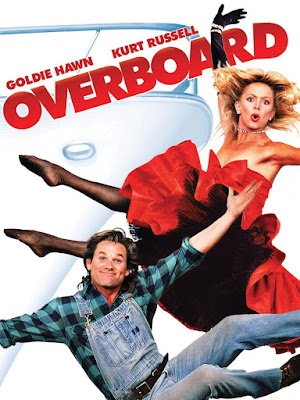

The Boomer garbage we were raised with

Legacy Puritanism

Some of the Anglo-American aversion to reality arises from legacy puritanism and its reflexive tendency to suppress ‘unpleasant’ features of human nature; hence the hysterical and dysfunctional 'zero tolerance' policies concerning drugs and prostitution in the USA. By contrast, the Hispanic world is comfortable with both diversions. Similarly, the Anglo authorities would rather dismiss the issue of mass male sexlessness than accept the 'unpleasant' reality of human sexual needs. Unfortunately for them, reality cannot be banished indefinitely.

Legitimate Nostalgia

The post-war era, especially the period from 1958 to 1975, was an anomaly in economic terms. Because of its relative peace, prosperity and cultural significance, it has become a permanent lifestyle template for the Anglosphere (and indeed, the West in general). This is why the post-war era continues to ‘haunt’ the Anglosphere as an ideal, preventing rational appraisal of the present in many different spheres: education, law enforcement, politics and (above all) gender relations. Putting it bluntly, many people find wallowing in a half-mythical past far preferable to confronting (or even acknowledging) urgent contemporary problems. 

Anglosphere Atomisation: Social Isolation, Homosociality, Generationalism, Racism and Class Distinction

Because of its distinctive colonial history, laissez faire economics and ingrained homosociality, different classes, races, generations and sexes share few common experiences in the Anglosphere countries. Clearly, this conflicted situation will never promote objective appraisal of reality; consider how upper-middle class white Boomer politicians remain stuck in the 1950s, completely unaware of anyone else or their experiences. Similarly, homosocial academic feminists harbour distorted views about non-white or sub-8 men as 'privileged', since they never meet any. The Anglosphere's black urban underclass lives in an insular world of rap music, bogus aspirations and drive-by shootings, as if nothing else existed. Such atomised societies can never develop common arenas of discourse, the true engines of socio-cultural development. Inevitably, this results in a kind of existential inertia with no capacity to adapt or improve.

Conclusion: How Using the Right Map Confers Success

Rampant Blue Knights = Blue Balled Losers and Fantasists

For all the reasons outlined above (and doubtless many more), Anglo-American civilisation is trapped in a prison of outmoded information. As individuals, Anglo-American men are also applying outmoded information to their own lives; in sum, trying to navigate the twenty-first century with social and mental maps from the mid-twentieth century. This is potentially disastrous, given the reflexive misandry of the modern Anglosphere; a good analogy would be a modern traveller using a map of the Roman Empire to navigate around Europe and North Africa.

So here is the great lesson of this timely post: the Blue Pill in all its forms is a redundant map that no longer reflects reality. This is why those who follow it are invariably failures: Incel Tears are sexless Simps in denial; Blue Knights are blue-balled losers trapped in the cloying fog of Sexual False Consciousness; and PUAs are regularly fined (or arrested) for 'sexual harassment' (the feminist legal term for 'cold approach'). In sum, these Blue and Red Pilled clowns are trying to navigate the 21st century with maps drawn in 1958-1975: surely the road to nowhere, if ever there was one.

However, the converse must also be true: if the Black and Crimson Pills are accurate maps of reality, surely they ought to confer success instead of failure?

As John Smith says, the Crimson-Pilled man is primed to maximise his situation: he improves what he can while accepting his unchangeable limitations. After all, a sub-8 male kidding himself that 'looks or ethnicity don't matter' is on the royal road to failure. However, if he focuses on careers based on brain power and diligence alone (computing, engineering, finance, medicine) his life-chances improve exponentially. Similarly, a sub-8 male in misandrist North America should not waste his time pursuing hyper-hypergamous, racist Anglo women; far better to relocate to regions where gender-relations are more congenial (Latin America, Western Europe, Scandinavia, South East Asia).

In sum, the Crimson-Pill's skilful balance of self-improvement and objectivity guarantees personal success, within viable limits. In the 21st century, use a 21st century map; while the 1958 map looks nice, it no longer delivers.

Happy 2022!


If you look like this, try not rely too much on your 'personality'

Wednesday, 10 October 2018

Is the End in Sight? The First Mammal is Born to Two Mothers


A leading British newspaper recently carried some chilling scientific news:
Never has a major scientific breakthrough carried such sinister implications for mankind - specifically, for men.

“Sorry, chaps, you’re obsolete": that may as well have been the headline of an announcement that gripped the research community on Thursday, as the birth was revealed of the world’s first mammal born to two mothers.

A team at the Chinese Academy of Sciences stunned geneticists by revealing they had effectively rewritten the rules of reproduction, and in the process discovered exactly why some animals, including humans, need to have sex. The breakthrough came in the form of 29 mice successfully born to same-sex (female) parents.Not only were the animals born healthy, but they went on to have babies themselves.

A similar experiment using two male parents failed, however, the pups dying within days of being born.

In achieving the successful births, the researchers proved they had identified and overcome the factor that makes joint male-female involvement in reproduction essential for humans. Commentators said the study may pave the way for single-sex humans to reproduce in the future, although not any time soon. Mammals can produce offspring only through sexual reproduction using an female egg fertilised by male sperm.

Not all the natural world uses the same process.Some female birds, reptiles, fish and amphibians are able to reproduce alone, with hammerhead sharks and Komodo dragons some of the more colourful examples. The Chinese team set out to identify the genetic process that takes place at the point of mammalian conception that demands genes from both sexes.

They focused on a phenomenon known and “imprinting”, where for roughly 100 genes, only the copy that comes from the mother or only the copy that comes from the father ever becomes “switched on”. In human embryos, the male genes make up for the females ones that are not switched on and visa versa. It means an embryo made up of same-sex genes will effectively have some missing.

To overcome this barrier, the scientists obtained some embryonic stem cells from a female mouse and used the gene-editing Crispr-Cas9, which has been likened to a genetic pair of scissors, and were able to remove maternal imprinting by “snipping” out a single letter of genetic code from three crucial regions. The edited stem cells were then injected into the egg of a second female mouse, which successfully formed an embryo. Two-hundred-and-ten embryos were created to yield the 29 live mice.

Co-senior author Qi Zhou said: "This research shows us what's possible. We saw that the defects in bimaternal mice can be eliminated and that bipaternal reproduction barriers in mammals can also be crossed through imprinting modification."
Dr Teresa Holm, from the University of Auckland, said there is a chance in the long run that the technique could be developed to apply to humans. "[The research] may even lead to the development of ways for same-sex couples to reproduce healthy children of their own,” she said, although she pointed to “significant ethical and safety concerns that would need to be overcome”.

The researchers also produced 12 full-term mice with two genetic fathers, using a similar but more complicated procedure. These were transferred, along with placental material, into surrogate mothers. The bipaternal mice pups only survived for 48 hours after birth.

A spokesman for the Progress Educational Trust, a charity concerned with the ethics and law of genetic-assisted reproduction, said: "Creating a genetic offspring from two mice of the same sex is an exciting achievement. The scientific challenges and legal barriers that would need to be to overcome to make this possible in humans are huge and so make this unlikely to happen any time soon. That said, we should start discussing whether this is a noble endeavour."
SOURCE: UK Daily Telegraph - 11/10/2018

The legal and scientific 'barriers' this spokesman speaks of are so much moonmist and hot air. In the Anglosphere, the law is a feminist plaything. It has ensured that virtually all reproductive  rights and decisions are now firmly in female hands, with fathers little more than disposable sperm-donors and ATM machines. As we also know, the whole essence of the Anglosphere is gyneocratic misandry, an inevitable expression of its residual puritanism and attendant anti-life agendas. This culture detests masculinity, originality, virility and other masculine virtues; it prefers men to be desexualized pseudo-women, hence the endless support for the 'trans' subculture emanating from every orifice of 'mainstream' Anglo-American society.

In sum, this scientific news must have sent the Anglo elites into paroxyms of joy: their dream of a man-free society bereft of dissent, honour, reason and progress is at last in sight.


Friday, 19 February 2010

Homosociality: Key to the Anglosphere


I recently perused a book lying around the dentist's waiting room. As it seemed to be the work of an Anglo-American woman, I expected the usual farrago of puritanical, 'me, me, me,' misandrist nonsense. However, I was pleasantly surprised to find Debra Ollivier's What French Women Know offered some interesting insights on the Anglobitch phenomenon. The author is an Anglo-American expat female who married and settled in France. This has given her an unusual cross-cultural perspective. For example, she is aware that Anglo feminism is uniquely misandrist:

Though France has always been the land of love, let's not forget that it has also always been the land of sexism. That said, French women never danced on the hot coals of American-style feminism; their feminism burned with less militancy and lacked, as French historian Mona Ozouf saw it, the "unparalleled dimensions and unprecedented ferocity" of its Anglo counterpart. Put in racier terms, journalist Justine De Lacy pointed out in The New York Times during feminism's heyday that "French women, after all, did not exactly remove veils upon liberation; many did remove bras, but this was more in celebration than in protest against the female condition."

Precisely. And so it's come to pass (a turn of phrase that prunes away decades of complicated suffragette culture we simply can't squeeze into these pages) that enjoying the perks of femininity does not implicate French women in a plot to sustain their inadequacy, any more than sharing a deep complicity with men implies an abandonment of power. On the contrary, it tends to imbue them with a particular strength and commonsense wisdom about men that's been obscured in the Sturm und Drang of our gender-conflicted times.


However, her most interesting insight into the Anglobitch phenomenon involves her analysis of Anglo-American feminism's 'homosociality': a deep-embedded puritanical tendency for the sexes to be segregated from earliest childhood, leaving little room for mutual understanding and ultimately leading to an implicitly misandrist form of feminism:

Not long ago my husband saw an American ad for a mainstream cruise line selling Ladies Only cruises that featured a photo of women beaming together in what looked like a tropical paradise. I don't recall the headline, but I do remember my husband asking of the ad: "Are those women happy gay ... or gay gay?" It hardly seemed to matter. The point was that men were out of the picture and these women were overjoyed about it.

Indeed female-bonding industries are blooming all over the country, catering to the desire to keep men out of our hair - and provide welcome relief in the process. "I'd rather spend the evening with my rabbit than go out and deal with men," says Charlotte York in an episode of Sex and the City - and she isn't speaking of a fuzzy bunny. Maureen Dowd's Are Men Necessary? says it all in the title alone.

Think about it: by French standards we Anglos do indeed socialize in great same-sex packs. We have our Ladies Nights, our bachelor parties, and our chick nights; we have our bridesmaids and our grooms and even our ex-wives clubs. We have our sororities and our fraternities (which literally don't exist in France and which, once explained to the baffled French, appear medieval with their feuding same-sex
fiefdoms). We have such a stunning array of gender-specinc bars, associations, networks, and groups that 0 magazine headlined a recent article on bar-hopping, ladies-only, tail-guzzling excesses with the alarming question: ARE GIRLS THE NEW GUYS? Talk about a new spin on gender studies.


At a more theoretical level, it seems that serious French thinkers are well aware of this puritanical gender-distinction in Anglo culture:

"Men and women were separated socially in your society," social scientist Alain Giami once elabo¬rated in a phone discussion. "That's a very important historical element that distinguishes Anglo-Saxon culture and French culture. You have much more 'homosociality' in your culture." Let us forgive Giami the unbearably anthropological ring of the word homosociality and consider that he has a point.


Recollecting her own youth and childhood in the United States (presumably in some bourgeois enclave), the author cites many examples of homosociality at work:

...though even in the playgrounds of my youth and during some of feminism's brightest moments, I could recall the enduring seeds of "homosociality" in the way boys and girls were often segregated. (The day we were ushered into the school auditorium with the solemnity of a slightly alarming liturgical rite to watch gender-specific sex education films comes immediately to mind.)


Awareness of homosociality and its potential problems in fact enjoys a long and illustrious history in the francophone world. Many French writers - or expatriate Anglo-Americans viewing the Anglosphere from afar - have long made pithy comments on the effects of Anglo-American puritanism. The rather one-dimensional, blinkered nature of Anglo women is one particularly well-worn topic:

Like Alain Giami, Madame de Stael had a point, and it's interesting to note how that point has been observed by those who followed in her footsteps. A quick sampling of quotes over the centuries:

Alexis de Tocqueville took one good hard look at America's growing colonies and noted: "America is the one country in the world where the most continual care has been taken to trace clearly separated lines of action for the two sexes, and where the wish is for them to walk with equal steps, but always on different paths."

Living in France, Edith Wharton observed her American sisters from afar and offered these harsh words: "It is because American women are each other's only audience, and to a great extent each other's only companions, that they seem, compared to women who play an intellectual and social part in the lives of men, like children in a baby school." (Ouch.)


Of course, the Anglobitch Thesis maintains that Anglo feminism has always been an expression of Anglo values, not any kind of revolt against them. Ollivier's experience strongly confirms this. Most interestingly, the author also links the Anglo 'Princess Cult' to Anglo homosociality:

It's in accepting perfectly imperfect human emotions, with a certain realistic snap to her gait, that the French woman goes into marriage (if she goes into it at all, that is). And because she doesn't live with the enduring belief in Happily Ever After, the French woman also doesn't live under the shadow of its biggest mascot: the princess.

There's no denying that as the largest girl franchise on the planet, the princess is nothing if not spectacular in America. It's equally hard to deny the sagesse in the observations of Peggy Orenstein, who once opined in a New York Times piece ("What's Wrong with Cinderella?") that beyond the happy pink patina something cruel and unhappy looms. "There are no studies proving that playing princess directly damages girls' self-esteem," she writes. "But there is evidence that young women who hold the most conventionally feminine beliefs - who avoid conflict and think they should be perpetually nice and pretty - are more likely to be depressed." Orenstein goes on to describe that emotional axis of evil that snares the princess in the "paralyzing pressure to be 'pert' ...


In short, conditions like anorexia are merely expressions of Anglo puritanism and homosociality, not pathologies as such. Though there are problems with this book - for example, do these concepts apply beyond the French/American upper-middle class? - one cannot but feel that she is 'onto something' in her superficial, feminine way. Ultimately, there can be little doubt that the terrible relations between the sexes across the Anglosphere owe much to the puritanical homosociality at the root of Anglo culture:

Readers, let us bite into the Big Camembert with this: In France men and women actually like one another. A lot. There is no Anglo-style war of the sexes going on. French men and women actually want to be together. They enjoy their mutual company. They spar. They debate. They flirt. They seek out one another's company in a multiplicity of social settings. Anyone who's dined with the French will be struck by the boy-girl-boy-girl seating arrangements imposed by the host or hostess. This is more than simply stuffy protocol, of which the French are, of course, connoisseurs.


The Ubiquity of Anglo Homosociality

Anglo homo-sociality is so all-pervasive as to be ‘transparent’. Like air, it is everywhere, but we have ceased to notice it. The phenomenological philosophical school offers a profound explanation of this phenomenon, which can greatly enrich our understanding of the Anglobitch situation/disaster currently engulfing the Anglosphere. A good example of a ‘transparency process’ cited by German philosopher Martin Heidegger is learning to drive.

At first, the basic elements of driving present a huge obstacle to the learner. Steering, changing gears and using the indicators are all, initially, onerous tasks requiring considerable effort. As the learner progresses, familiarity with these tasks renders them ‘transparent’. They become so intimately enmeshed in our conscious being that we cease to ‘notice’ them. Heidegger also cites professional athletes whose mastery of ball or racquet reveals an absolute intimacy with items outside their own bodies: in short, the ball or racquet has become totally ‘transparent’. In some respects, this profound philosophy echoes the ideas of Antonio Gramsci: that an all pervasive hegemony rules every complex society, proving its framework of ‘common-sense’.

Of course, in time any hegemony will become ‘transparent’, just as driving becomes transparent. Sheer familiarity makes it so. Only when we step outside our own hegemony or venture into another do we truly perceive our own hegemonic indoctrination. What we considered ‘self-evident’ is revealed as entirely arbitrary, but one lifestyle among many.

In a general sense, these concepts have much to offer the pan-Anglosphere Men’s Movement. Male expendability, Princess Syndrome, hypergamy, misandry – all have become ‘transparent’ in the Anglosphere, hegemonic features so embedded by non-linear socio-cultural feedbacks that we no longer ‘notice’ them – they are, in short, ‘transparent’ (to borrow Heidegger’s concept). When millions of dollars of dollars are spent finding some white, middle class Anglobitch who trips on a woodpile, and the media mourn her with days of airtime, we no longer notice it. Absurdly preferential treatment for the Anglobitch has become ‘common sense’, a ‘transparent’ reflex. Indeed, the practical essence of the Anglobitch thesis involves exposing these ‘transparent’ assumptions and repudiating them. For example, the assumption that only males initiate domestic violence is another potent ‘transparent’ hegemonic assumption across the Anglosphere - and demonstrably wrong.


'Game' Reconsidered

The PUA/Game subculture reflects the homosocial nature of Anglo-Saxon culture. Features like ‘chick crack’ – wherein PUAs carefully study characteristic ‘female’ preoccupations like astrology, healing crystals, palmistry and tarot cards – are implicitly rooted in a severe homosocial distinction between the sexes. Indeed, it could be rightly said that ‘Game’ largely involves teaching men how women think, in a culture where the sexes are severely divided in psycho-sexual terms. This is why Game is primarily an Anglo-Saxon phenomenon, and has its strongest proponents in the United States – the most implicitly homosocial and puritanical nation in the Anglosphere. Of course, being largely unaware of the Anglobitch Thesis, most PUA/Game experts are blind to the culturally-specific nature of their enterprise. Game developed to ‘bridge’ the sharp gender-divide in Anglo societies, allowing men to seduce women by teaching them female response patterns - much as hunters have to learn the migratory and behavioural patterns of their prey. In non-Anglo societies, the need for ‘chick crack’ and other PUA strategies is obviated by the fact that the sexes enjoy a far greater measure of existential overlap outside the Anglosphere.


The Dangers of Homosociality

A tragic tale indicative of the cultural specificity of Anglo-Saxon homosociality is that of Celine Figard. This young French student evidently expected to hitch-hike across Britain with impunity, and was briskly raped and murdered by a British trucker for her pains. She reckoned without the class-based homosociality prevailing in Britain, which has no direct analogue in her native France. This generally ensures that low-status males grow up with a pronounced sense of sexual disenfranchisement and grievance, especially in relation to young, attractive women. Figard was entirely unaware of this murderous working-class sexual rage, perhaps viewing the trucker as a helpful father-figure (as she might in her homeland). She found out that the Anglosphere is very different – that working class Anglo-Saxon males view attractive girls as unattainable sexual prey, not ‘friends’ or daughter surrogates. These Anglo feelings of homosocial, class-based rage explain why some of the most renowned sex-murderers in history are working-class English males: indeed, beginning with Jack the Ripper and Herman Mudgett, the serial sex-killer is largely an Anglo-Saxon phenomenon.